1-5
How Does the Tree of Life Explain Insect Diversity?
Insects were among the first animals to colonize land and freshwater, the first to evolve powered flight and the first to form complex societies. Later innovations, including complete metamorphosis, specialized mouthparts, acoustic communication and new forms of ecological engineering, opened further opportunities for diversification.
To understand when these traits arose and whether they evolved once or repeatedly, we first need a reliable evolutionary framework. The 1K Insect Transcriptome Evolution project, or 1KITE, brought genomic sequencing, palaeontology, morphology and taxonomic expertise together to reconstruct the deep branches of the insect tree of life.

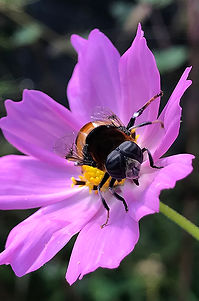
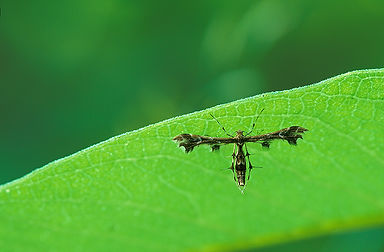
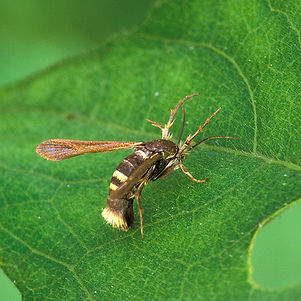
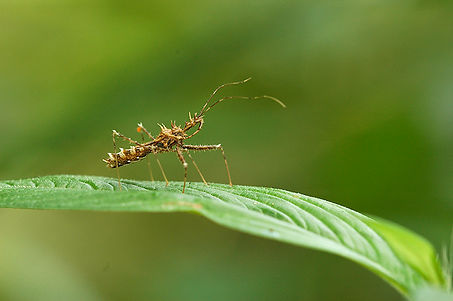
Reconstructing the innovations that transformed life on Earth
A trait can be interpreted only when it is placed within evolutionary history. A robust phylogeny reveals whether wings, new feeding strategies, social behaviour and other innovations were inherited from a common ancestor, lost in particular lineages or reinvented independently.
How did evolutionary innovations allow insects to occupy nearly every environment on Earth?
Placing insect innovations in evolutionary time
Insects comprise the most species-rich group of animals, yet the relationships among many of their major lineages remained uncertain well into the genomic era. Short sets of genes often produced conflicting trees, especially where ancient lineages had diverged rapidly. Without a stable phylogeny, it was difficult to determine when defining insect traits arose or how they contributed to later diversification.
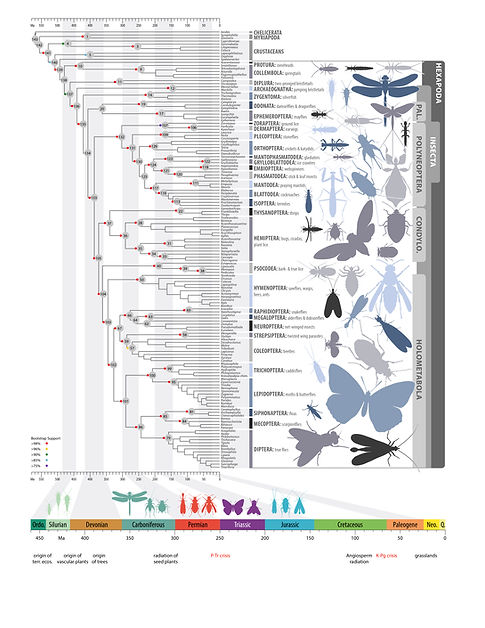
The first major synthesis from 1KITE analysed 1,478 protein-coding genes across all living insect orders. It resolved many previously disputed relationships and dated the origin of insects to approximately 479 million years ago, substantially earlier than the oldest known insect fossils. The analysis placed the origin of insect flight at approximately 406 million years ago and the early diversification of the major living lineages of winged insects at approximately 345 million years ago. The principal radiation of insects with complete metamorphosis occurred later, during the rise of increasingly complex terrestrial ecosystems (Misof et al., 2014).
This framework changed the study of insect innovations. Terrestrialization, flight and metamorphosis could now be interpreted as events occurring along particular branches of a dated tree rather than as isolated anatomical traits. It also showed where evidence remains inadequate. Several early-diverging lineages still lack high-quality genomes even though they are essential for resolving questions surrounding the colonization of land and the origin of wings (Li et al., 2025).
Flight opened the three-dimensional world
The evolution of wings was one of the most consequential innovations in animal history. Flight allowed insects to disperse rapidly, escape predators, locate scattered resources and move between habitats. It also created new ecological opportunities on land and around freshwater.
The 1KITE framework placed the origin of insect flight in the Early Devonian. Subsequent analyses refined the early history of the winged insects. Transcriptomic reconstruction of dragonfly and damselfly evolution showed that the lineages containing these early flying insects and their extinct relatives originated by the Permian, while the major living dragonfly and damselfly lineages began diversifying during the Triassic (Kohli et al., 2021).
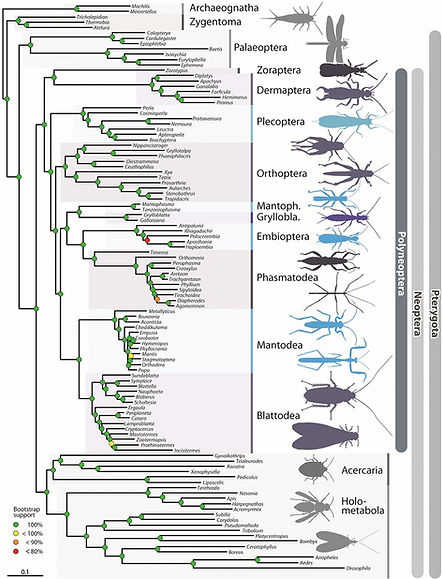
Resolving the relationships among Polyneoptera, which includes stoneflies, grasshoppers, cockroaches, termites, earwigs and several smaller orders, was also important for interpreting early wing evolution. These relationships had resisted earlier analyses because the groups diverged rapidly and subsequently developed very different body forms and lifestyles. By combining thousands of genes with morphological, ecological and behavioural characters, 1KITE produced a substantially clearer framework for reconstructing the ancestral form and biology of these early winged insects (Wipfler et al., 2019).
New ways of feeding opened new resources
Once insects occupied terrestrial and freshwater environments, changes in feeding structures allowed different lineages to exploit previously inaccessible resources.
The phylogeny of hemipteroid insects clarified the history of one of the most important transitions: the modification of ancestral chewing mouthparts into piercing and sucking systems. These changes allowed thrips, true bugs and several parasitic lice to feed on plant vascular fluids, blood and other liquid diets. The 1KITE analysis used 2,395 single-copy genes to resolve most major relationships within this group, establishing the evolutionary framework needed to distinguish shared innovations from independent modifications of the feeding apparatus (Johnson et al., 2018).
Butterflies and moths provide another example. Their early ancestors fed on nonvascular land plants, but the evolution of a tube-like proboscis during the Triassic enabled adults to obtain fluids, including nectar. Later diversification occurred within an increasingly complex ecological setting involving flowering plants, predators and other interacting organisms. By reconstructing nearly all major lepidopteran lineages and dating their divergence, 1KITE provided a historical basis for evaluating these long-standing hypotheses about the evolution of feeding and plant–insect relationships (Kawahara et al., 2019).


Evolution repeatedly built new ways of living
Many insect innovations were not singular events. Similar ecological functions arose repeatedly through different evolutionary routes.
Caddisfly larvae engineer freshwater habitats using silk to construct retreats, capture nets and portable cases. A nearly family-complete phylogeny showed that portable case making did not originate once. It evolved independently on three occasions from free-living ancestors. These structures provide protection, camouflage and respiratory benefits and can also stabilize stream substrates. Yet the appearance of portable cases alone did not immediately cause each major diversification; later ecological innovations built upon this earlier capacity (Frandsen et al., 2024).
Acoustic communication in crickets, katydids and grasshoppers also followed different pathways. In ensiferan insects, forewing-based sound production and tibial ears evolved in association. In caeliferans, abdominal ears first arose in a nonsexual context and were later recruited for communication after sound-producing structures appeared. The study found little evidence that acoustic communication itself consistently accelerated diversification, illustrating that an evolutionary novelty does not automatically generate a radiation (Song et al., 2020).
Order-level studies also revised apparently established interpretations. Phylogenomics reversed the traditional placement of the two major earwig lineages, requiring the ancestral earwig body plan and the history of maternal and social behaviour to be reconsidered (Wipfler et al., 2020). Studies of stick and leaf insects showed that their living diversity arose through a relatively recent and rapid radiation whose deepest branches could not be resolved reliably with traditional gene sampling (Simon et al., 2019).
These examples reveal the same principle: the meaning of an innovation depends on the tree on which it evolved.
Tracing the origins of complex societies
Sociality is among the most striking outcomes of insect evolution. However, colonies formed by termites, ants, bees and social wasps arose in different branches and from different ancestral conditions.
The 1KITE analysis of cockroaches and termites confirmed that termites are deeply nested within cockroaches. This relationship places termite eusociality within a lineage already characterized by family associations and forms of parental care, providing an evolutionary context for the transition from subsocial ancestors to highly integrated colonies (Evangelista et al., 2019).
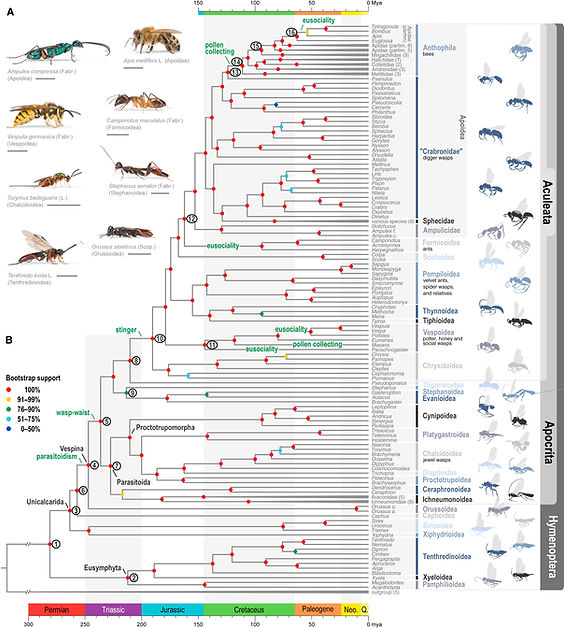
A separate analysis reconstructed the most comprehensive phylogenomic framework then available for Hymenoptera. It resolved the origins of the parasitoid wasps, the wasp-waisted Hymenoptera, the stinging wasps and the bees. This framework connected the emergence of bees to their ancestry among apoid wasps and provided the deep evolutionary context required to study later transitions in diet, nesting and social organization (Peters et al., 2017).
The purpose of these trees is not simply to place names in order. They identify the ancestral conditions from which major innovations emerged and show whether apparently similar forms of sociality share a common origin or represent separate evolutionary experiments.

1KITE made difficult questions collaborative
No laboratory could have produced this evolutionary framework alone. 1KITE united specialists who supplied carefully identified specimens, morphological and palaeontological evidence, transcriptome sequencing, orthology assessment, computational model development and expertise in particular insect groups.
The initial insect-wide tree provided a common scaffold. Researchers could then increase taxonomic sampling within difficult branches, reuse transcriptomes and outgroups from the broader project, combine them with newly collected taxa and test relationships under alternative analytical models. Studies of Paraneoptera, Polyneoptera, Hymenoptera, Coleoptera, Blattodea, Lepidoptera, Orthoptera, Odonata, Neuropterida, Plecoptera, Phasmatodea, Dermaptera and Trichoptera progressively refined different regions of the same tree.
These studies did not always produce simple certainty. The Paraneoptera analysis, for example, strongly resolved most relationships within the three major orders but found conflicting signals around the deepest placement of Psocodea. By exposing rather than concealing such conflict, phylogenomics identifies where additional taxa, better-fitting models or different forms of evidence are still required (Johnson et al., 2018).
The collaborative structure also allowed transcriptomic evidence to be combined with morphology, fossils and denser sets of conventional markers. In stoneflies, transcriptomes established the backbone while a much larger Sanger dataset supplied species coverage for dating and biogeographic analysis. The resulting tree supported long-distance dispersal, rather than simple continental vicariance, as the principal explanation for their unusual antitropical distribution (Letsch et al., 2021).
1KITE therefore created more than a collection of individual phylogenies. It established a shared genomic and intellectual infrastructure through which deep evolutionary questions could be addressed at a scale matching the diversity of insects.
Phylogenomics and genomics reinforce one another
The influence also extends beyond systematics. Genomics and phylogenomics now operate as mutually reinforcing parts of entomological research.
High-quality genomes improve the recognition and annotation of orthologous genes in transcriptomes and support the design of conserved markers for phylogenetic analysis. A robust phylogeny then guides the selection of strategically important species for genome sequencing. Instead of sequencing only convenient pests or model organisms, researchers can target lineages that clarify major evolutionary transitions or provide critical comparisons for understanding adaptation (Li et al., 2025).
Genomes also change the scale at which biological mechanisms can be studied. Traditional work often examined one candidate gene at a time. Whole genomes allow researchers to analyse all members of a gene family, pathway or regulatory network, compare expansions and contractions across lineages and connect population-level variants with traits through genome resequencing and functional experiments. Entomology consequently moves from reductionist gene-by-gene analysis toward a more integrated understanding of biological systems.
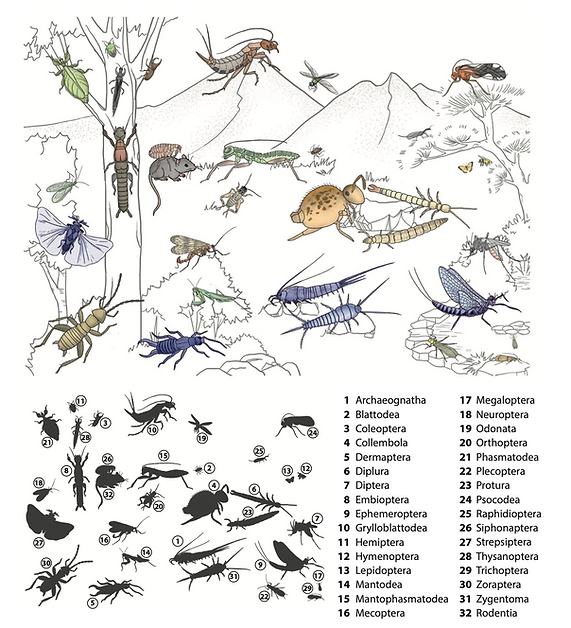
The phylogenetic framework is essential to this process. An expanded sensory gene family, a novel regulatory element or a change in developmental pathway gains evolutionary meaning only when compared across appropriately selected lineages. Conversely, genomic mechanisms help explain how the innovations mapped onto the tree were produced.
This synergy links the deepest history of insects with contemporary studies of physiology, behaviour, adaptation and ecological function. The tree of life is no longer only a record of relationships. It is the comparative framework that allows genomic differences to be interpreted as biological change.

Extending the tree to species-level biodiversity
1KITE resolved the deep architecture of insect evolution, but most insect diversity lies near the tips of the tree. Ecological surveys, taxonomy and conservation usually work with species, while transcriptomes and whole genomes remain unavailable for most of them. A complete evolutionary framework therefore requires a way to connect phylogenomic backbones with the much denser coverage provided by museum collections and DNA barcode libraries.
We first tested this strategy in Chimarra, a large and globally distributed genus of caddisflies. COI barcodes alone recovered many useful relationships among closely related species, but their rapidly evolving signal was less reliable at intermediate and deeper nodes. Adding a single nuclear ribosomal marker, 28S, supplied the more conserved information needed to stabilize those relationships. The combined tree agreed closely with the established morphological classification, showing that complementary markers and expert taxonomy could generate a practical species-level phylogeny without requiring genomic data for every species (Kjer et al., 2014).
This approach treats barcode trees as hypotheses rather than final species trees. COI provides extensive taxonomic coverage and strong information near the tips, while nuclear markers, morphology and genomic evidence strengthen the deeper structure. Unexpected or weakly supported relationships identify where additional evidence is needed rather than being accepted uncritically. The value lies in reciprocal support among different forms of evidence, with organismal systematics connecting phenotype, taxonomy and DNA.
The Trichoptera Barcode of Life Initiative expanded this model across an entire insect order. By 2016, the database included every caddisfly family, approximately two-thirds of the genera and one-third of the described species. Most of these species had never previously been included in a formal phylogenetic analysis. The project combined robust relationships derived from morphology, multilocus studies and transcriptomes with the broad species coverage of COI barcodes, producing the largest Trichoptera phylogeny then available (Zhou et al., 2016).
The principle was demonstrated clearly in Agrypnia. A phylogenomic backbone based on hundreds of genes established the deeper placement of the genus, additional 28S sequences resolved relationships within it, and barcode data extended the tree to species and geographic populations. Each source of evidence was used at the scale where it was most informative, rather than asking a single marker to resolve the whole tree.
The resulting tree provided an evolutionary context for taxonomic and ecological work. It could suggest sister species and suitable outgroups, associate unknown life stages, reveal possible misidentifications and highlight species complexes requiring revision. Because the underlying data and analyses could be updated, the tree was conceived as a developing scientific resource rather than a fixed diagram published once in print.
This species-level framework also completes the connection with our earlier biodiversity work in Churchill. The regional barcode libraries established there identify mayflies, stoneflies and caddisflies and connect their life stages. Placing those species within an evolutionary tree adds another dimension: local communities can be studied not only by counting species, but also by asking how much evolutionary history they contain, whether environmental change removes isolated lineages or clusters of close relatives, and how ecological traits are distributed across the regional fauna.
The progression from 1KITE to species-level trees therefore bridges two scales of biodiversity research. Phylogenomics establishes the major branches and the history of key insect innovations. Barcode libraries extend that framework toward the species and populations encountered in natural communities. Neither scale is sufficient alone. Their integration turns the tree of life into a working structure for taxonomy, genomics, ecology and long-term biodiversity monitoring.

Why evolutionary frameworks matter
Insect diversity arose through major innovations such as terrestrialization, flight, specialized feeding, metamorphosis, communication and sociality. Understanding when these traits evolved, and whether they arose once or repeatedly, requires a reliable evolutionary framework.
Through 1KITE, transcriptomes, morphology, fossils and international expertise were integrated to resolve the deep insect tree, while order-level studies reconstructed the origins of key traits. Genomics and phylogenomics now reinforce one another: genomes reveal mechanisms, phylogenies guide comparisons, and barcode libraries extend the framework to species-level diversity.
The resulting evolutionary framework connects the deepest branches of insect evolution with regional communities such as Churchill, allowing biodiversity to be understood as the outcome of evolutionary history rather than simply a list of species.
Nest question
The insect tree of life provides the evolutionary framework for interpreting adaptation. The next challenge is to understand how these evolutionary changes are encoded in genomes and translated into biological function.
How do genes, physiology and symbiotic microorganisms enable insects to adapt to changing environments?
This question leads to Pillar 2: Adaptation and Biological Interactions.