1-1
How Do We Discover Biodiversity?
Studies of biodiversity begin with a basic question: which species are present? For many organisms, the answer remains difficult because only one life stage or sex has been formally described. Larvae, females and damaged specimens may be impossible to identify, while closely related species can differ only in characters recognizable to specialists.
Our research examines how DNA barcoding can overcome these limitations without separating molecular identification from traditional taxonomy. By linking standardized DNA sequences to expertly identified voucher specimens, barcodes connect life stages, clarify species boundaries, reveal overlooked diversity and create reference libraries that can be reused in ecological and evolutionary research.
From unidentified specimens to a global biodiversity framework
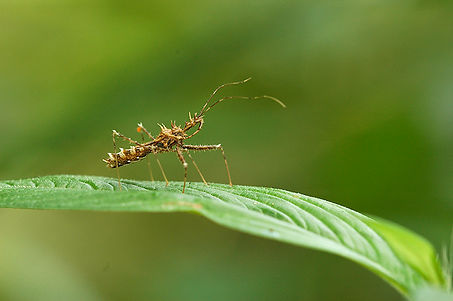
DNA barcoding was developed as a standardized molecular tool for species identification. In our research, its application expanded from associating unknown larvae with identified adults, to documenting regional faunas, revealing overlooked diversity and organizing taxonomic knowledge across an entire insect order.
How can a short DNA sequence help us discover, identify and organize biodiversity?
Linking life stages and clarifying species boundaries
Species identification is a major constraint in freshwater biodiversity research. Caddisfly taxonomy has traditionally relied heavily on adult males, whose genital structures provide many of the characters used to distinguish species. Larvae dominate freshwater habitats and are important indicators of water quality, but most cannot be identified to species because they have never been reliably associated with their adult forms.
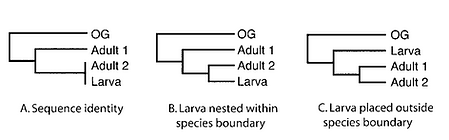
Our early research developed an integrative approach for associating caddisfly larvae and adults. Adult morphology was first used to define candidate species, while mitochondrial COI and nuclear 28S sequences provided independent evidence for testing species boundaries and assigning unknown larvae. The work showed that DNA could accelerate life-stage association while retaining morphology and taxonomic expertise as essential parts of the process (Zhou et al., 2007).
Some morphologically supported species contained deep mitochondrial variation, whereas other species that were difficult to distinguish as adults had clearer differences in their larvae. DNA barcoding therefore did more than identify specimens: it connected previously separate forms of evidence and revealed where species boundaries required closer investigation.
Building a regional biodiversity library
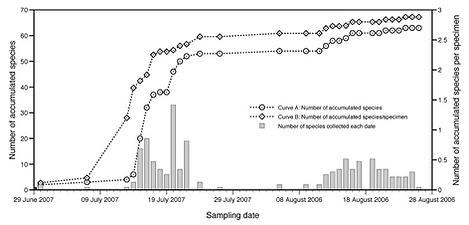

Once individual species could be recognized consistently, the next challenge was to document an entire regional fauna. Churchill, Manitoba, became an important testing ground because it lies at the transition between boreal and tundra ecosystems and contains a wide range of freshwater habitats.
Our research established a regional DNA barcode library for mayflies, stoneflies and caddisflies. Barcode clusters generally agreed with morphologically recognized species, while also revealing many previously unrecorded taxa, potentially new species and deeply divergent lineages. Each DNA sequence was linked to a voucher specimen and its collection information, creating a permanent and reusable reference system rather than a one-time inventory (Zhou et al., 2009, 2010).
The fieldwork also revealed that biodiversity inventories depend on careful temporal and spatial sampling. Many Churchill caddisflies emerged during brief periods, and numerous species were associated with particular freshwater habitats. Reference libraries must therefore grow through repeated sampling across seasons, habitats and years rather than through a single collecting event.
The Churchill library later enabled the largest caddisfly larval-association effort conducted at a single locality. Unknown larvae were connected to most of the recorded regional fauna, and these molecular associations were translated into morphological diagnoses, photographs and an identification key. DNA evidence therefore generated practical taxonomic resources that could subsequently be used without sequencing every specimen (Ruiter et al., 2013).
This programme established my long-term research connection with Churchill and contributed foundational reference resources for northern biodiversity research. Our current work in Pillar 3 extends this experience from freshwater species inventories to plant–pollinator communities and ecological networks.
Connecting local and global reference libraries
Regional reference libraries do not need to be built entirely from specimens collected within the focal area. Our work in Great Smoky Mountains National Park tested whether records from the global Trichoptera Barcode of Life project could accelerate the construction of a regional library.
Combining an intensive local survey with barcode records collected elsewhere provided coverage for more than 90% of the park’s known caddisfly fauna. Global records supplied references for species that were rare or seasonally absent from the local survey, while local collections contributed uncommon taxa, fresh material and information about regional genetic variation (Zhou et al., 2011).

The study also exposed unresolved species complexes. Some named species shared closely related barcodes, while others contained multiple divergent lineages. In several cases, nearly indistinguishable adults were accompanied by more clearly differentiated larvae. These conflicts were not treated as failures of either DNA or morphology. They identified where broader sampling, additional genetic markers and renewed taxonomic study were needed.
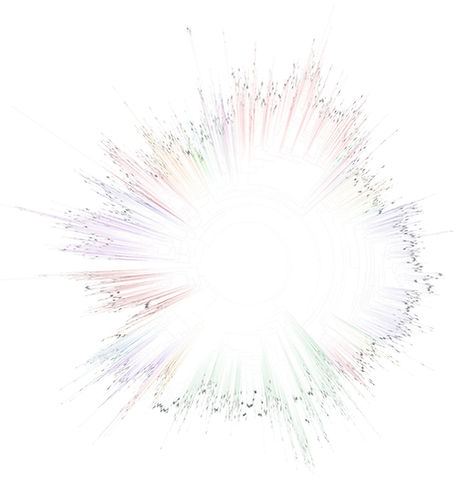
Species-level phylogeny of Trichoptera based on 16,000 unique COI haplotypes, representing the most comprehensive phylogenetic framework available at the time.(Zhou et al. 2016. Phil. Trans. Roy. Soc. B Biol. Sci.)
From a global initiative to a species-level tree
The Trichoptera Barcode of Life Initiative led by my group extended this work from regional faunas to a global scientific community. By 2016, its database included every caddisfly family, approximately two-thirds of the genera and one-third of the described species. More than 16,000 unique barcode haplotypes were assembled into the largest Trichoptera phylogeny available at the time (Zhou et al., 2016).
The study did not assume that a single mitochondrial marker could resolve the complete evolutionary history of caddisflies. Instead, it proposed a combined strategy: robust relationships reconstructed from morphology, multiple genes and transcriptomes provide the evolutionary backbone, while dense barcode coverage places thousands of species at the tips. This approach joined the strength of phylogenomics with the broad species coverage of DNA barcoding.
The resulting framework could identify possible sister species, associate unknown life stages, detect misidentified database records and highlight species boundaries requiring taxonomic revision. Because it was maintained online, it could also be corrected and expanded as new specimens, sequences and expert assessments became available.
The 2016 synthesis marked the culmination of the Trichoptera Barcode of Life project. The programme progressed from associating larvae with adults, to constructing regional reference libraries, to coordinating an international resource connecting species identification, taxonomy and evolutionary history.
Reliable identification is not the endpoint of biodiversity science. Once reference libraries can recognize individual organisms, the same molecular framework can be applied to samples containing many species. The question then changes from “Which specimen have we collected?” to “Which organisms make up this biological community?”

Why species identification matters
Biodiversity cannot be registered, measured, monitored or conserved without reliable species identification. DNA barcoding links life stages and sexes, recognizes specimens lacking diagnostic morphology, tests existing species boundaries and directs taxonomic attention toward overlooked diversity.
Reference libraries make this knowledge cumulative. A voucher-linked sequence produced in one study can later identify an unknown larva, support a regional inventory, expose a misidentified specimen or help place a species within a broader evolutionary framework. Our research in Churchill shows how these resources can support scientific questions across decades, from the original documentation of freshwater insects to the community-level ecological studies now developing in Pillar 3.
Nest question
Reference libraries allow us to identify individual organisms, but most biological samples contain many species at once.
Can DNA reveal an entire biological community without first sorting and identifying every specimen?
This question leads to the next feature:
How Do We Reveal Entire Biological Communities?