2-3
How Do Social Interactions Shape Colony Function?
Honey bee colonies survive by collectively acquiring, allocating and storing nutritional resources. Every flower visited, every gram of stored honey and every developing larva results from the coordinated activities of thousands of workers performing different tasks. As environments change, colonies must continually adjust how they forage for pollen and nectar and allocate nutritional resources to ensure colony survival. Pollination and honey production emerge as natural consequences of these adaptive behaviours.
Our work asks how these colony-level responses emerge from interactions among individuals. We found that a conserved neuropeptide pathway centred on the Leucokinin receptor (Lkr) links communication between larvae and workers to colony-wide resource allocation. This work further revealed why Lkr became one of the most consistently selected genes during the adaptive radiation of the Asian honey bee.

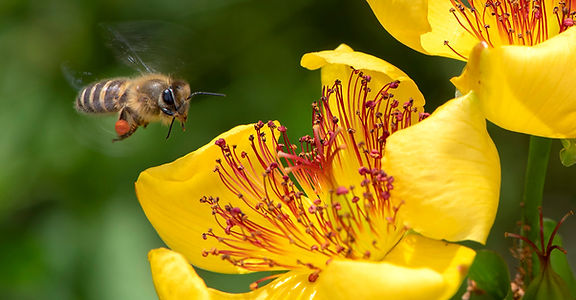


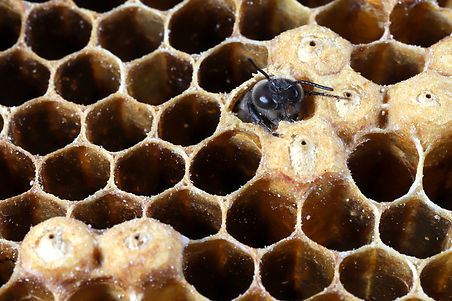
The colony as the unit of adaptation
Honey bee colonies respond to environmental change not as collections of independent individuals but as integrated superorganisms. Communication among larvae and workers continually reshapes physiology, behaviour and resource allocation, allowing the colony to function as a coordinated whole.
How do social interactions transform individual responses into collective adaptation?
Colonies function through communication among individuals
The nutritional demands of a colony continually change. Developing larvae require protein-rich brood food, adult workers depend primarily on carbohydrates, and colonies must balance immediate brood development with long-term honey storage, especially to survive prolonged winters in temperate regions. No individual worker possesses information about the needs of the colony as a whole. Instead, colony function emerges through continuous communication among its members.
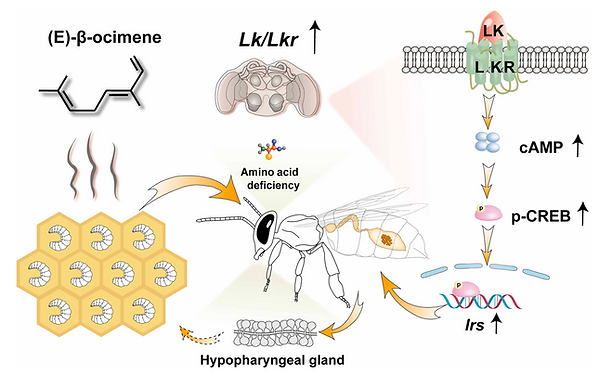
We found that developing larvae actively participate in this process. Hungry larvae release the volatile pheromone (E)-β-ocimene (EBO), providing nurse bees with direct information about brood nutritional demand. Rather than functioning as passive recipients of food, larvae regulate the physiology of the workers that care for them (Li et al. 2026).
A conserved pathway coordinates colony nutrition
The molecular basis of this communication lies in the Leucokinin (Lk) and Leucokinin receptor (Lkr) signalling pathway. Activation of Lkr by larval EBO initiates a cAMP–PKA–CREB signalling cascade that activates the insulin receptor substrate (Irs), enlarges the hypopharyngeal glands and increases production of major royal jelly proteins. Larval signals are therefore translated directly into physiological changes that increase the capacity of nurse bees to provision brood (Li et al. 2026. Sci. Adv.).
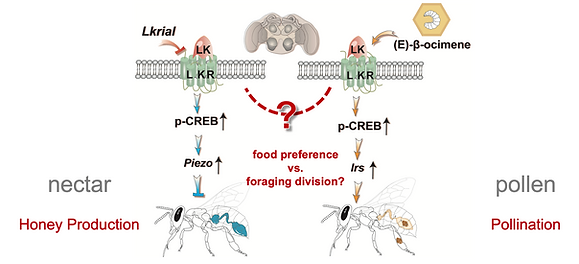
The same pathway also regulates how colonies acquire food. Activation of Lk/Lkr suppresses sucrose consumption while increasing pollen intake, redirecting worker nutrition toward the protein resources required for larval development. Instead of independently regulating brood care and foraging, the pathway coordinates both processes, coupling larval demand with colony-wide nutritional allocation (Li et al. 2026. IBMB).
These studies show that Lk/Lkr is not simply a regulator of feeding behaviour. It integrates social signals, worker physiology and foraging decisions into a coordinated colony response.
Social interactions shape ecological interactions
By coordinating nutritional demands with worker behaviour, colonies continually adjust how they exploit floral resources. Colonies investing heavily in brood increase pollen collection, whereas colonies preparing for overwintering shift their effort toward nectar collection and honey storage. These adaptive changes alter how honey bees interact with flowering plants across different environments.
Although pollination is carried out by individual workers, the collective organization of the colony determines when and where bees forage, which floral resources they prioritize and how efficiently they exploit them. Pollination patterns therefore emerge from the coordinated behaviour of thousands of workers responding to the nutritional demands of a single colony. Likewise, the amount of honey stored reflects how colonies allocate resources between immediate growth and future survival.
Evolution acts through the superorganism
This perspective also explains one of our earlier evolutionary discoveries.
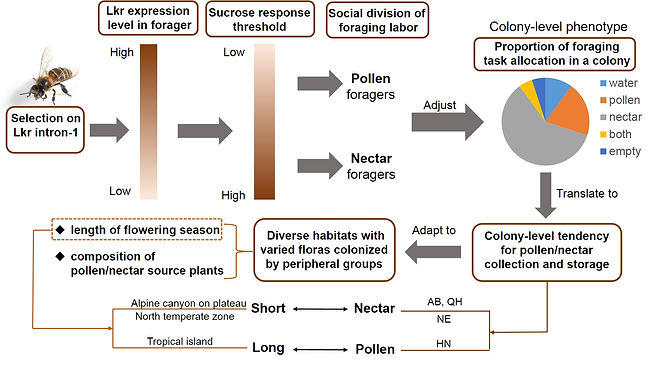
In our population genomic analysis of Apis cerana, multiple peripheral populations independently adapted to distinct climates and floral communities. Among the genes repeatedly selected during these independent radiations, Lkr showed one of the strongest and most consistent signatures of positive selection (Ji et al. 2020). At the time, we demonstrated that Lkr regulates workers' sucrose responsiveness, a behavioural trait previously shown to influence the division of nectar and pollen foraging. This finding suggested that repeated selection on Lkr may have contributed to colony adaptation, although the underlying mechanism remained unknown.
The subsequent mechanistic studies now provide that explanation. By coordinating communication between larvae and workers, Lk/Lkr regulates worker physiology and nutritional decisions, linking brood demand with colony-wide resource allocation. These coordinated responses provide a mechanistic explanation for why evolutionary changes in Lkr could influence colony-level adaptation across diverse environments.
This work illustrates a defining feature of eusocial evolution. In solitary animals, individuals are the primary units that respond directly to environmental challenges. In honey bees, thousands of individuals function together as a superorganism, allowing colonies to respond collectively through coordinated physiology, behaviour and resource allocation. Natural selection ultimately changes populations and species, but it favours genetic variants that improve how colonies function as integrated biological units under local environmental conditions.
Repeated selection on Lkr illustrates this principle. By fine-tuning communication between larvae and workers, evolutionary change modified how entire colonies coordinate labour and nutritional resources. As honey bee populations expanded into environments with different climates and floral communities, these colony-level responses improved their ability to exploit local resources and survive under diverse environmental conditions. The resulting differences in pollination patterns and honey production are ecological consequences of these evolutionary adaptations.
Beyond the colony
The communication network of a honey bee colony does not end at the hive. While this work reveals how interactions among larvae and workers coordinate colony function, honey bees also rely on intimate partnerships with organisms beyond their own species. Gut microorganisms influence nutrition, metabolism and immunity, extending the colony's capacity to respond to changing environments.
This work also points to a broader principle of adaptation. Biological interactions are themselves targets of evolution. Within the colony, communication among nestmates allows thousands of individuals to function as a superorganism. Beyond the colony, interactions with beneficial microorganisms further expand the adaptive capacity of honey bees.
Our next research story explores how the gut microbiota becomes an integral partner in honey bee adaptation, linking microbial symbiosis with nutrition, immunity and environmental resilience.

Why social interactions matter
Honey bee colonies function as biological superorganisms. Environmental challenges are met not by isolated individuals but through communication among larvae, workers and queens, allowing the colony to continuously adjust nutritional investment and resource allocation.
Understanding how social signals reshape individual physiology explains how evolutionary changes in single genes can influence colony-level adaptation.