
Connecting evolution, adaptation and ecosystem resilience
Understanding biodiversity requires more than documenting species or explaining how they evolve. In the first two research pillars, we investigate the evolutionary history that generates biodiversity and the biological mechanisms that enable organisms to adapt to changing environments. These discoveries reveal how species differ in their origins, adaptations and ecological characteristics.
The next challenge is understanding how these individual differences influence the communities that species collectively form. Environmental change does not affect all organisms equally. As species respond at different rates, the interactions among plants, pollinators and other organisms are reorganized, altering the ecological networks that sustain ecosystem function. Understanding these community-level responses is essential for predicting the future of biodiversity in a rapidly changing world.
The Subarctic provides an exceptional opportunity to investigate these questions. Located at the transition between the boreal forest and the Arctic tundra, this region is experiencing some of the most rapid environmental change on Earth. Warming temperatures, permafrost thaw and shifting vegetation are transforming biological communities, yet the consequences for ecological interactions remain poorly understood.
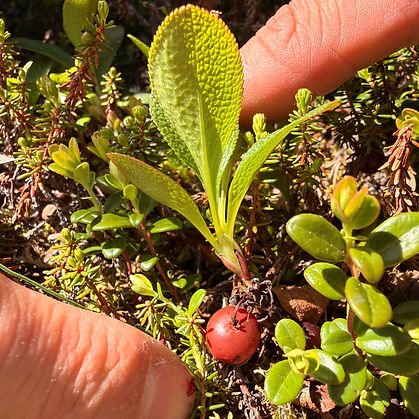
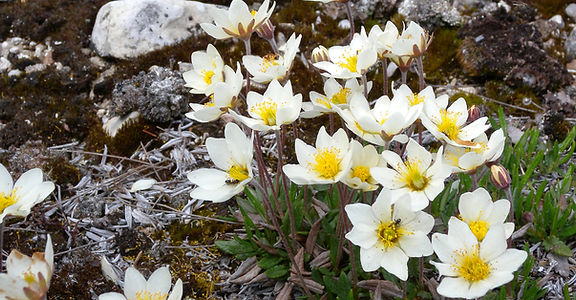
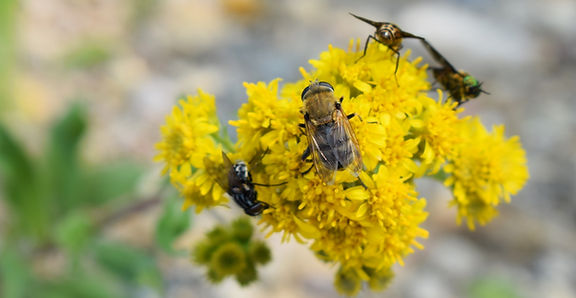
Berries are vital food resources for local communities and wildlife. Which species pollinate berry-producing plants? How do different pollinators respond to environmental disturbances? And how do environmental changes influence berry production through their effects on plant–pollinator interactions?
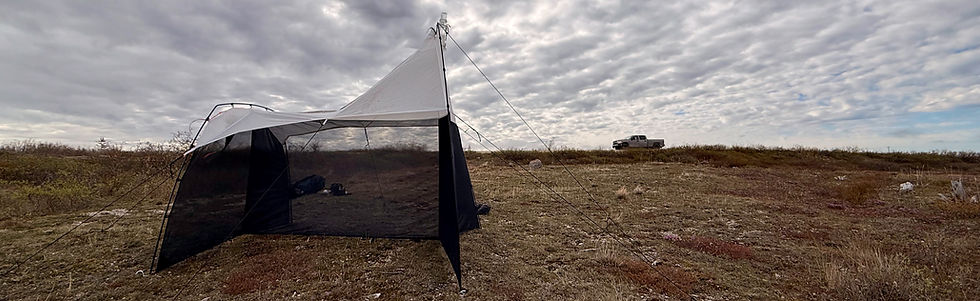
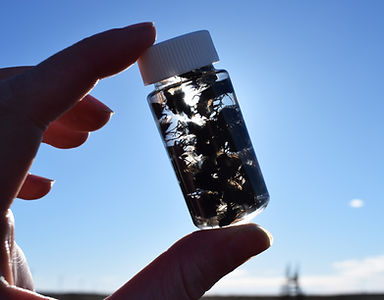
Churchill, Manitoba, is uniquely positioned to address this challenge. Decades of biodiversity research have produced one of the world's most comprehensive regional reference libraries for plants and insects, supported by curated voucher collections, DNA archives and long-term research infrastructure. Combined with its compressed flowering season and diverse pollinator assemblages, these resources make Churchill an ideal natural laboratory for integrating biodiversity genomics with ecological observation.
By establishing a long-term genomic observatory at Churchill, we are creating a research platform that connects the discoveries of evolutionary biology with the ecological processes that determine how biological communities respond to environmental change.

Why Churchill?
Churchill provides an exceptional setting for observing biodiversity under rapid environmental change. Its compressed growing season, diverse pollinator communities and long-term research infrastructure create an ideal natural laboratory for studying ecological communities.
Yet documenting biodiversity is only the beginning. Understanding how ecosystems function requires moving beyond species inventories to reveal the interactions that connect organisms into ecological networks.