BUILDING THE NEXT GENERATION
Addressing biodiversity challenges requires scientists who can work across traditional disciplinary boundaries.
Our observatory provides an immersive training environment where students integrate field ecology, biodiversity genomics and computational biology to understand ecological communities.
Introduction
A long-term ecological observatory is more than a research platform. It is a living classroom where students participate in every stage of scientific discovery, from designing field studies and collecting specimens to analyzing genomic data and communicating scientific findings. Rather than training specialists in a single discipline, our goal is to develop researchers who can integrate evolutionary biology, organismal biology and ecology to address complex biodiversity challenges.
Training emphasizes scientific curiosity, critical thinking and independent research. Students are encouraged to develop their own questions, learn across disciplines and acquire transferable skills that prepare them for diverse careers in academia, government, conservation and biotechnology. Field-based learning is complemented by laboratory research, computational analyses and international collaborations, allowing trainees to experience the complete research process.
How do students learn biodiversity science?
The Churchill observatory exposes trainees to every stage of an integrated biodiversity research program.
Field ecology
Students participate in:
-
Designing ecological surveys
-
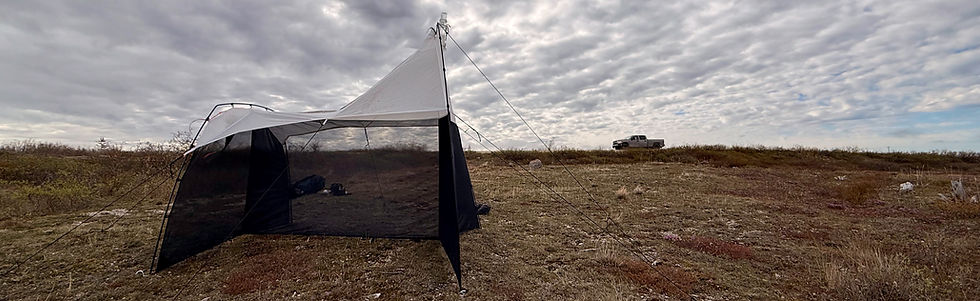
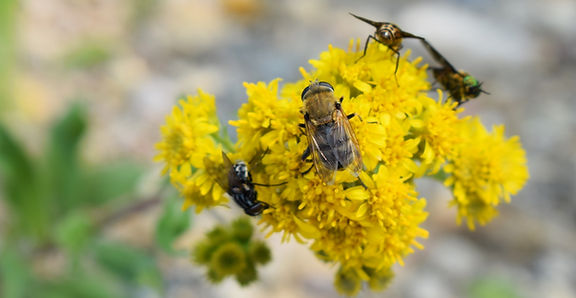
Pollinator sampling using hand collections, Malaise traps and pan traps
-
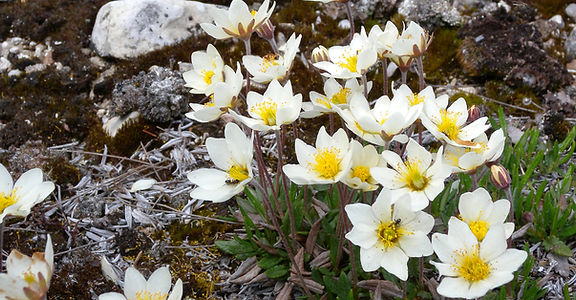
Plant surveys and herbarium voucher preparation
-
Phenology monitoring
-
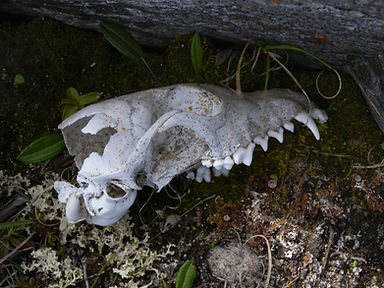
Specimen curation and biodiversity inventories
Students learn not only how to collect data, but also why standardized field protocols are essential for long-term ecological research.

Heaven for the "mosquitologists"
Biodiversity genomics
Field collections are transformed into genomic resources through hands-on laboratory training.
Students receive experience in:
-
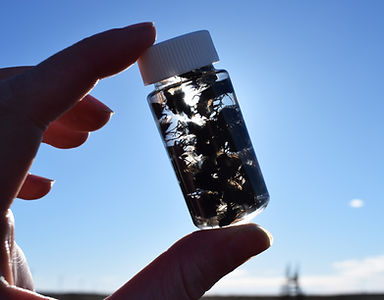
DNA extraction and specimen preservation
-
DNA barcoding
-
Genome sequencing
-
Pollen genome skimming
-
Molecular ecology
-
Biodiversity data management
These activities connect classical natural history with modern biodiversity genomics.
Computational ecology
The final stage moves from data generation to ecological understanding.
Students develop skills in:
-
Bioinformatics
-
Biodiversity databases
-
Ecological network reconstruction
-
Statistical analyses
-
Data visualization
-
Reproducible computational workflows
Training therefore extends beyond producing datasets to interpreting ecological processes across biological scales.

The Tundra Buggy
Learning through collaboration
Scientific discovery is inherently collaborative. Students work alongside faculty members, postdoctoral researchers, technicians and collaborators from multiple disciplines, contributing to projects that integrate evolution, genomics, ecology and conservation.
The Churchill field program also provides opportunities to interact with researchers and visitors at the Churchill Northern Studies Centre, communicate biodiversity science to the public, contribute observations through iNaturalist and participate in broader discussions about northern ecosystems and environmental change. These experiences strengthen scientific communication while demonstrating how research connects with society.
Preparing scientists for the future
The biodiversity challenges of the coming decades cannot be solved within traditional disciplinary boundaries. Understanding how ecological communities respond to environmental change requires scientists who are equally comfortable working in the field, the laboratory and the computational environment.
Our long-term vision is to cultivate researchers who can move seamlessly across biological scales, connecting evolutionary history, organismal adaptation and ecological interactions to develop predictive frameworks for understanding biodiversity in a changing world. Through the Churchill observatory, students become active participants in building this next generation of biodiversity science.

Training the next generation
Students learn biodiversity science by participating in every stage of the research process, from field ecology and biodiversity genomics to computational analyses and scientific communication.
Long-term ecological research, however, extends beyond the laboratory. Sustaining an observatory requires partnerships that connect researchers with local communities, citizen scientists and collaborators who share a commitment to understanding biodiversity.